mes系统英文介绍

Manufacturing Execution System (MES) plays a crucial role in modern manufacturing processes by ensuring real-time monitoring, control, and optimization of production activities. Key benefits include improved production efficiency, enhanced quality control, and better traceability. One significant advantage of MES is its ability to integrate with other enterprise systems, providing a seamless flow of information across the organization, thereby enhancing decision-making processes.
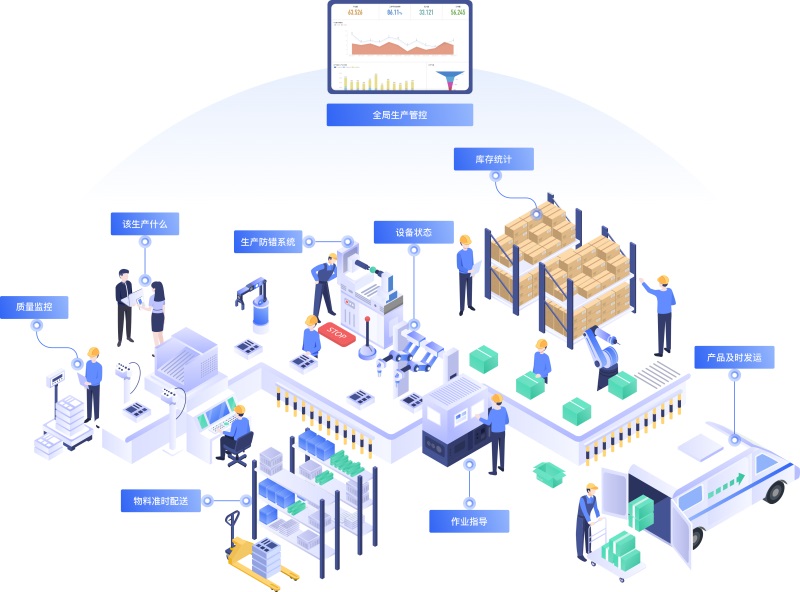
I、DEFINITION AND SCOPE OF MES
Manufacturing Execution Systems (MES) are computerized systems used in manufacturing to track and document the transformation of raw materials into finished goods. MES operates in real-time to enable the control of multiple elements of the production process (e.g., inputs, personnel, machines, and support services). Its primary goals are to ensure effective execution of manufacturing operations and improve production output. MES bridges the gap between enterprise resource planning (ERP) systems and the shop floor, serving as a critical enabler of Industry 4.0.
The scope of MES includes a variety of functionalities such as resource allocation and status, operation scheduling, dispatching production units, data collection, labor management, quality management, process management, and performance analysis. By providing a real-time snapshot of manufacturing operations, MES enables manufacturers to respond swiftly to changing conditions and optimize performance continuously.
II、KEY FEATURES OF MES
1. Real-Time Monitoring and Control: MES provides real-time data collection and monitoring of production activities. This feature allows for the immediate identification and correction of issues, reducing downtime and improving overall equipment effectiveness (OEE). For instance, if a machine is operating outside of its standard parameters, MES can alert operators to take corrective actions immediately.
2. Quality Management: MES incorporates quality control processes directly into production workflows. It ensures that products meet specified quality standards by monitoring critical parameters and conducting in-line inspections. This integration helps in reducing defects and rework, thereby improving product quality and customer satisfaction.
3. Traceability and Genealogy: Traceability is a crucial aspect of MES, enabling manufacturers to track the history, application, or location of an item by means of recorded identification. Genealogy tracking provides detailed records of the materials, processes, and subassemblies used to produce each product. This information is invaluable for compliance with industry regulations and for conducting root cause analysis in the event of product recalls.
4. Resource Management: Effective management of resources such as personnel, equipment, and materials is facilitated by MES. It ensures that the right resources are available at the right time and place, optimizing resource utilization and reducing waste.
5. Scheduling and Dispatching: MES systems support advanced scheduling and dispatching capabilities, allowing for dynamic scheduling adjustments based on real-time data. This flexibility helps in managing production priorities, minimizing lead times, and improving on-time delivery performance.
6. Performance Analysis and Reporting: MES provides comprehensive analytics and reporting tools that help in evaluating production performance. Metrics such as cycle time, yield, and OEE can be tracked and analyzed to identify areas for improvement. These insights support data-driven decision-making and continuous improvement initiatives.
III、BENEFITS OF IMPLEMENTING MES
1. Enhanced Production Efficiency: By providing real-time visibility into manufacturing processes, MES helps in identifying bottlenecks and inefficiencies. This visibility enables manufacturers to optimize workflows, reduce cycle times, and increase throughput.
2. Improved Quality Control: MES ensures that quality checks are integrated into the production process, reducing the likelihood of defects. By monitoring critical parameters and enforcing quality standards, MES helps maintain high product quality and compliance with industry regulations.
3. Better Traceability and Compliance: With robust traceability features, MES enables manufacturers to maintain detailed records of production processes. This capability is essential for compliance with regulatory requirements and for conducting root cause analysis during product recalls or investigations.
4. Reduced Downtime: Real-time monitoring and predictive maintenance capabilities of MES help in minimizing unplanned downtime. By identifying potential issues before they escalate, MES ensures that maintenance activities are performed proactively, keeping production lines running smoothly.
5. Increased Agility and Flexibility: MES supports dynamic scheduling and resource allocation, allowing manufacturers to respond quickly to changing demands and production priorities. This agility is crucial in today’s fast-paced manufacturing environment.
6. Enhanced Decision-Making: The real-time data and comprehensive analytics provided by MES support informed decision-making at all levels of the organization. By providing a holistic view of production operations, MES enables managers to make strategic decisions that drive continuous improvement.
IV、MES AND INDUSTRY 4.0
Integration with IoT and Smart Devices: MES is a cornerstone of Industry 4.0, the fourth industrial revolution characterized by the integration of cyber-physical systems, IoT, and smart devices. MES systems can interface with a wide range of IoT-enabled devices, collecting data from sensors and machines to provide a real-time view of the production environment. This integration enhances the ability to monitor and control production processes remotely and efficiently.
Big Data and Advanced Analytics: The vast amount of data generated by MES systems can be leveraged for advanced analytics. By applying big data analytics, manufacturers can uncover hidden patterns and insights that drive process optimization and innovation. Predictive analytics, for instance, can be used to forecast equipment failures and schedule maintenance activities proactively, further reducing downtime and improving asset utilization.
Cloud Computing: Cloud-based MES solutions offer several advantages, including scalability, flexibility, and reduced IT infrastructure costs. Cloud computing enables manufacturers to access MES functionalities from anywhere, facilitating collaboration across distributed manufacturing sites. Additionally, cloud-based MES can be easily integrated with other cloud-based enterprise systems, providing a seamless flow of information across the organization.
Cybersecurity Considerations: As MES systems become more interconnected with other enterprise systems and IoT devices, cybersecurity becomes a critical concern. Ensuring the security of MES involves implementing robust access controls, data encryption, and continuous monitoring for potential threats. Manufacturers must adopt best practices in cybersecurity to protect their MES and related systems from cyber-attacks and data breaches.
V、IMPLEMENTATION CHALLENGES AND STRATEGIES
1. Integration with Existing Systems: One of the primary challenges in implementing MES is integrating it with existing enterprise systems such as ERP, SCM, and PLM. Successful integration requires a clear understanding of data flows and interfaces between systems. Using standardized communication protocols and middleware can facilitate seamless integration.
2. Change Management: Implementing MES often involves significant changes to existing processes and workflows. Effective change management strategies, including stakeholder engagement, training, and clear communication, are essential to ensure a smooth transition and user adoption.
3. Data Quality and Management: The effectiveness of MES relies on the quality and accuracy of the data it collects. Ensuring data integrity involves implementing robust data governance practices, including data validation, cleansing, and regular audits.
4. Scalability and Flexibility: As manufacturing operations grow and evolve, the MES must be scalable and flexible to accommodate changing requirements. Choosing a modular MES solution that supports incremental implementation and customization can help address this challenge.
5. Cost and ROI Considerations: The cost of implementing MES can be significant, and manufacturers must carefully evaluate the return on investment (ROI). Developing a clear business case that outlines the expected benefits, cost savings, and productivity improvements can help justify the investment.
6. Vendor Selection: Choosing the right MES vendor is critical to the success of the implementation. Manufacturers should evaluate vendors based on their industry experience, solution capabilities, support services, and customer references. Conducting thorough due diligence and pilot testing can help in selecting the best-fit solution.
VI、FUTURE TRENDS IN MES
1. Artificial Intelligence and Machine Learning: AI and machine learning are poised to revolutionize MES by enabling more advanced analytics and decision-making capabilities. Predictive maintenance, demand forecasting, and process optimization are just a few areas where AI can add significant value.
2. Edge Computing: Edge computing involves processing data closer to the source of data generation, reducing latency and bandwidth usage. By integrating edge computing with MES, manufacturers can achieve faster and more efficient real-time data processing and analytics.
3. Augmented Reality (AR) and Virtual Reality (VR): AR and VR technologies are being increasingly integrated with MES for applications such as training, maintenance, and remote assistance. These technologies enhance the ability to visualize and interact with production data, improving decision-making and operational efficiency.
4. Blockchain Technology: Blockchain offers a secure and transparent way to record and verify transactions. Integrating blockchain with MES can enhance traceability, reduce fraud, and improve supply chain transparency.
5. Sustainability and Green Manufacturing: MES will play a crucial role in supporting sustainability initiatives by optimizing resource utilization and reducing waste. Advanced MES solutions can track and report on key sustainability metrics, helping manufacturers meet regulatory requirements and corporate sustainability goals.
6. Human-Machine Collaboration: The future of MES will see increased collaboration between humans and machines, facilitated by advanced interfaces and automation technologies. Collaborative robots (cobots) and intelligent assistants will work alongside human operators, enhancing productivity and safety.
In conclusion, MES is an indispensable tool for modern manufacturing, driving efficiency, quality, and innovation. By understanding its features, benefits, and implementation challenges, manufacturers can leverage MES to achieve their strategic objectives and stay competitive in an increasingly complex and dynamic industry landscape.
相关问答FAQs:
What is a MES system?
A Manufacturing Execution System (MES) is a software solution that helps manufacturing companies plan, track, and control production activities in real-time. MES systems provide a comprehensive view of the manufacturing process, from order scheduling to product delivery, by collecting and analyzing data from various sources on the factory floor.
How does a MES system improve manufacturing efficiency?
MES systems play a crucial role in improving manufacturing efficiency by streamlining production processes, reducing downtime, optimizing resource utilization, and enhancing overall productivity. By providing real-time visibility into production activities, MES systems enable manufacturers to identify bottlenecks, track key performance indicators, and make data-driven decisions to enhance operational performance.
What are the key features of a MES system?
Some key features of a MES system include:
- Production scheduling and planning: MES systems help manufacturers create detailed production schedules, allocate resources effectively, and optimize production workflows.
- Real-time monitoring and control: MES systems enable real-time tracking of production activities, machine performance, and quality control metrics to ensure smooth operations.
- Quality management: MES systems support quality control processes by monitoring product quality, detecting defects, and ensuring compliance with industry standards.
- Inventory management: MES systems help manage inventory levels, track material usage, and optimize supply chain processes to minimize waste and reduce costs.
- Reporting and analytics: MES systems provide comprehensive reporting tools and analytics capabilities to analyze production data, identify trends, and drive continuous improvement initiatives.
版权声明:本文内容由网络用户投稿,版权归原作者所有,本站不拥有其著作权,亦不承担相应法律责任。如果您发现本站中有涉嫌抄袭或描述失实的内容,请联系邮箱:hopper@cornerstone365.cn 处理,核实后本网站将在24小时内删除。
相关文章推荐
最近更新
织信MES生产管理系统:实现生产过程智能化管控
织信MES生产管理系统是一款专注于生产过程管理的系统,它可以帮助企业实现生产过程的智能化管控,提高生产效率,保证产品质量。
核心模块
· 生产计划与排程:支持根据销售订单和生产能力,制定合理的生产计划,提供高级排程算法。
· 生产执行管理:实现生产过程的实时监控和管理,支持生产工单的创建、下达、执行和完工管理。
· 质量管理:支持从原材料检验到成品检验的全流程质量管控,支持质量检验计划的制定、检验数据的采集和分析。
· 设备管理:支持设备台账管理、设备维护计划制定、设备故障报修和处理等功能。
· 物料管理:实现生产过程中的物料跟踪和控制,支持物料需求计划的生成、物料领用和消耗管理。
织信MES生产管理系统基于低代码平台开发,具有强大的集成能力和数据驱动的决策支持。系统支持与ERP、PLM、WMS等系统的无缝集成,实现数据共享和流程协同。通过实时数据采集和分析,系统提供多维度的生产数据分析报表,如生产效率分析、设备利用率分析、质量分析等。
各行业用户的共同选择







客服电话
0755-86660062
获取您的专属数字化方案